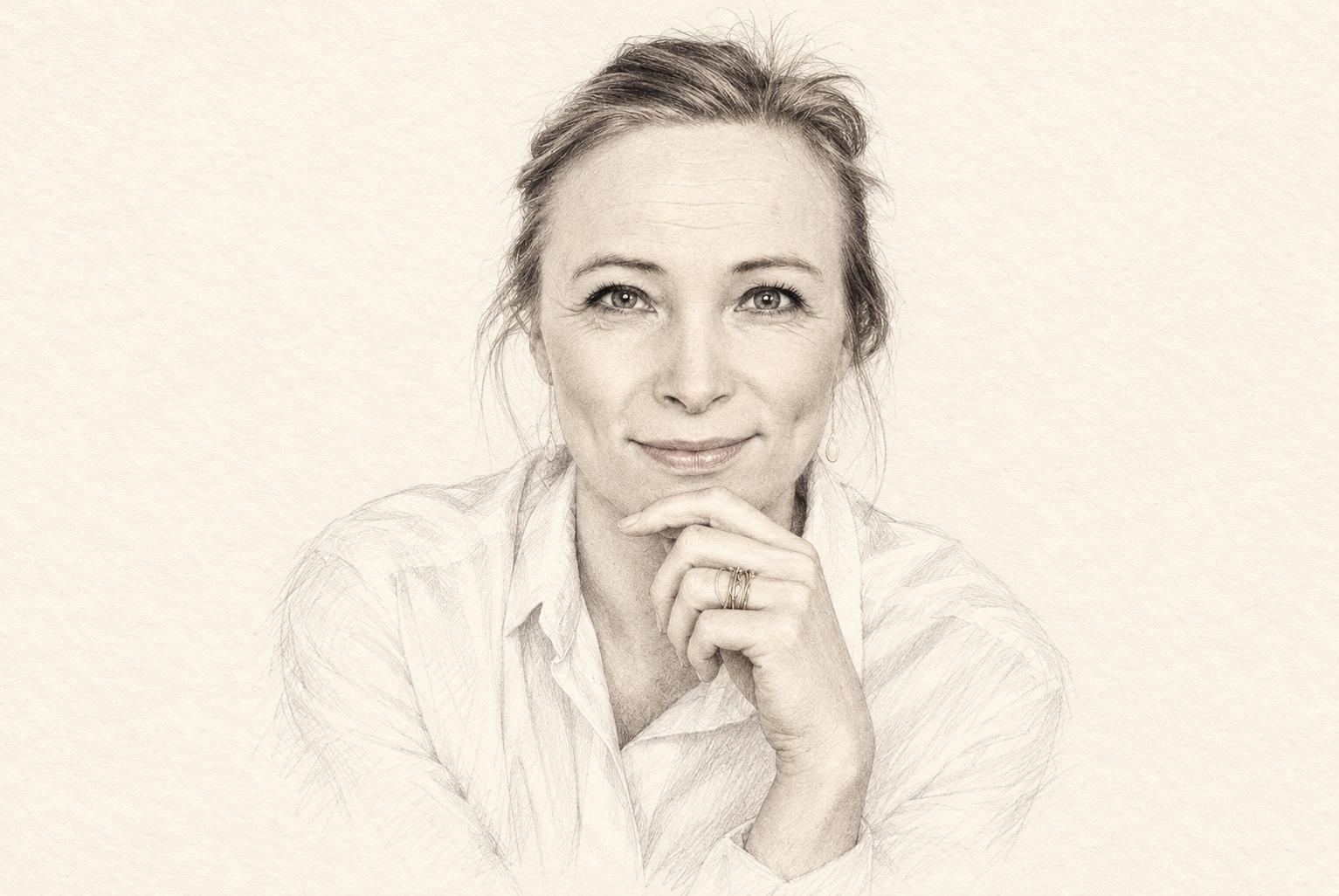
When Iben Sandahl watches children playing in mud, she sees something adults can easily overlook: the pleasure of being absorbed in something no one has asked them to accomplish. She notices their discovery of what feels smooth or rough, and the small courage it takes for a hesitant child to join the others. What she values is their freedom to explore without having to achieve a particular result.
“First of all, I see there’s no agenda, which is lovely in itself,” she says. “The pleasure and the fun they’re having without anyone wanting them to do something specific.”
For Iben, a Danish author, former teacher and narrative psychotherapist, these moments reveal something worth protecting in family life. Her work explores how relationships, language and trust shape children’s sense of themselves, while reminding us to value the childhood they are living now.
“Childhood is not simply preparation for adulthood; it is an important part of life in its own right.”
The Childhood She Carried With Her
Iben grew up in Aarhus, Denmark, and fondly remembers summers at a large summer house her father shared with other families, where there were always children nearby and enough space for their play to unfold.
They ran through the dunes, swam in the sea, gathered leaves, invented games and put on theatre, moving through days that did not need to be directed at every turn.
“I just remember being outside, being free,” she says, recalling the friends around her and the reassurance of knowing the adults were there. “It felt safe.”
When she became a mother to two daughters, now in their twenties, Iben hoped to offer them something of that same freedom, although she would come to understand that each needed something different in order to experience it.
A Moment That Shaped Her as a Mother
When her eldest daughter was about three, Iben noticed that she did not always join the other children when friends came to visit. Sometimes she returned to her mother for comfort, and Iben found herself feeling irritated because she wanted her little girl to feel confident enough to go off and play. After urging her back toward the children, she would feel sad and guilty that she had not offered the reassurance her daughter needed.
“It took me some time to understand that my reaction was not really about her. It was about me,” she says.
As she reflected on her reaction, Iben recognized how her memories of childhood had become expectations of how her daughter should behave.
“I was expecting my daughter to be more like me rather than allowing her to be herself,” she says.
Once she understood this, it became easier to offer her daughter the closeness and security she needed, without her own expectations getting in the way.
“When we become curious about our own reactions, we create more room to see our children for who they really are.”
What a Danish Childhood Can Give
Denmark’s reputation for happiness led Iben to a question: how might a Danish childhood shape the adults children become? Drawing on her own upbringing, her experience as a mother and the values she recognized in families around her, she explored that connection in her first book, The Danish Way of Parenting.
In her books, Iben explores principles that work together through the relationship between parent and child: empathy helps a parent consider what lies behind behavior, reframing offers another way of understanding a situation, and play gives children room to explore. Together with authenticity, trust and hygge, they express a way of living with children in which each feels valued and part of a wider community.
“Children need to feel they belong. Not because of what they achieve, or how they behave, but simply because of who they are.”
In her work with children, adolescents and families, Iben sees how the emphasis on achievement and how others perceive us can leave both children and parents feeling that they are never quite enough. Her approach to Danish parenting returns to the security of belonging, giving children room to discover themselves without feeling that their place in the family depends on how well they perform.
Even a positive label can become difficult to carry, she explains, because the child who is always described as the good one or the well-behaved one may begin to understand that description as their place in the world. “Who are you that day when you’re not that anymore?” she asks.
Her attention to language reflects her work as a narrative psychotherapist and her commitment to authenticity, including the willingness to discuss difficult experiences. She wants parents to examine their responses and acknowledge mistakes without turning every exchange into another test of whether they are parenting correctly.
“Many parents today have become afraid of getting things wrong,” she says. “There’s so much advice and so much pressure to do everything correctly.”
“Parenting is a relationship, and it is not performance.”
Giving Children Time to Make Life Their Own
In Play the Danish Way, Iben explores the importance of free play alongside the activities parents organize to prepare children for the future. She recognizes the value of organized activities, while emphasizing that children also need free time to absorb the day’s lessons and impressions.
“They need time to digest all that information to make it their own,” she says.
After a day of listening, learning and following instructions, that free time might begin with Lego, an invented game or the complaint that there is nothing to do. Children accustomed to being entertained may need practice deciding for themselves, with a parent nearby and available as they find their way into play.
“Time to be bored or time to just be for children is extremely important,” she says.
Trust also lives in the exchanges that accompany exploration. Iben asks parents to consider whether a repeated “Be careful” or “Let me do that” is necessary, or whether staying close enough to help could communicate confidence in a child’s abilities. Adults remain responsible for safety, while giving children room to discover what they can manage.
A question such as “Do you need my hand?” or an invitation to “Call me if you need me” offers support, while “I’m here, I’m looking at you, and I see you” expresses the acknowledgment a parent may have intended all along.
She hopes these nuances invite awareness without becoming another source of guilt. “It’s not like everything is bad if we do the opposite,” she says.
The Few Minutes That Welcomed Them Home
When her daughters returned from daycare or school, Iben made time to reconnect before turning to cooking and other responsibilities. When they were small, that could mean lying on a mattress on the floor and letting them climb over her. As they grew, they connected over a snack, a conversation on the sofa or a foot massage while they talked.
She describes school as a kind of work for children, who spend their energy participating and responding to expectations. By the time they come home, their “glass of energy” may be almost empty, and a parent can pause to notice whether they are hungry, tired or carrying something they need to share.
“How can I fill up a little bit of that glass of energy before I do something else?” she asks.
Sometimes a few minutes are enough, although the child’s needs matter more than the clock. For Iben, the conversation was about understanding how her daughters felt, rather than assessing what had gone right or wrong.
“The length isn’t important. It’s more like you give them that little piece of you that they need.”
As her daughters have grown, the ways they connect have changed, but Iben still makes room for the simple comfort of being together.
Freedom, With Somewhere to Return
In The Danish Way of Raising Teens, Iben challenges the idea that parents can do little once adolescence arrives. She recommends reading it before those years begin, because the relationship a family will rely on has been developing throughout childhood.
“They need us as much as they have always done, just in a different way,” she says.
Her daughters strengthened her belief in trust, confirming something she had observed as a teacher. When two boys regarded as difficult by other teachers were responsible for taking out the rubbish, she told them, “I know you will do it.” The boys followed through, showing her how an adult’s confidence in children can encourage them to take responsibility.
With her daughters, trust went alongside respectful communication and conversations about freedom and responsibility: when to come home, how to stay in contact and whom to call if something went wrong. They had room to encounter different opinions and discover their own boundaries, while knowing home remained a safe place to return.
Giving children a voice does not mean asking them to make every decision, she explains, because adults still carry responsibility for boundaries. Within that framework, teenagers need to feel heard and safe enough to speak openly when something has gone wrong.
When something goes wrong, Iben encourages families to talk it through and repair the relationship. As she puts it, “we repair, and we get wiser.”
Around the Table, With Room for Laughter
For Iben, hygge begins with “creating an atmosphere where everyone can relax and feel included.” Each person has a voice, and the family can let its guard down and enjoy being together without the expectation of a perfect family moment.
For a while, the family kept a little book and took turns sharing something from the day they felt proud of, whether helping someone, playing with a friend or finding the courage to say yes or no. As her daughters grew older, the practice became a more open conversation about their days.
“It is about putting aside our individual agendas for a while and enjoying being together simply,” she says.
There were also evenings with homemade burgers, sauce on their faces and the surprise of seeing their mother join the mess. The first time, her daughters asked, “What’s going on, mom?” as Iben followed an intuition that family life needed room for humor.
“Our role as parents can be so serious,” she says. By letting herself be silly and laughing at herself, she could show her daughters that she was comfortable being imperfect, while remaining their mother with the same respect and responsibility. Her daughters still remember those evenings.
Iben is an Inspiration
An accomplished author and psychotherapist, Iben brings a depth of understanding to family life that begins with her willingness to look honestly at herself. She inspires us to become curious about our own reactions as parents, especially the things that irritate or disappoint us, because they may reveal expectations or experiences we have yet to understand. That reflection can help us see our children more clearly and respond to what they need.
It also invites us to consider what we are passing forward through everyday family life: how we welcome a child seeking comfort, respond to mistakes and make room for feelings. Through those experiences, children learn something about what they can expect from others and how they might treat themselves.
“Our responsibility is not to shape children into who we want them to become, but to help them discover who they are.”
As a Keeper of Childhood, Iben carries forward something many of us remember from growing up: the freedom to play, wander and enjoy the day without needing to turn it into an achievement. In lives filled with school, activities and preparation for the future, she reminds us to make room for silliness and unhurried afternoons, valuing childhood’s pleasures, discoveries and relationships while they are happening. She inspires us to keep that freedom alive for our own children, to embrace the simplicity of being without becoming, and to let them be children.
“The way we treat children today influences how they will treat themselves and others tomorrow.”